Human knowledge has always depended upon storage. Clay tablets, libraries, printing presses, microfilm, hard drives, websites, and cloud servers have each helped preserve information beyond the moment when it was created. The Internet made publishing dramatically easier, but it did not necessarily make information permanent. Websites disappear. Domains expire. Companies close. Servers fail. Accounts are deleted. Databases are abandoned. Entire collections of useful information can quietly vanish.
Permanent and decentralized digital archives offer a different possibility. Instead of assuming that information survives only as long as one organization continues paying for a server, a network could distribute responsibility for preserving important data across many independent machines. Technologies such as Arweave, IPFS, and even blockchain-based systems for very small pieces of information already demonstrate parts of this idea. The larger opportunity is to make durable digital preservation simple enough that ordinary people can participate.
The Internet Is More Temporary Than It Appears
A webpage can look permanent while actually depending upon a surprisingly fragile chain of services. The domain must remain registered. Hosting bills must be paid. Databases have to remain intact. Software needs maintenance. The organization responsible for the site has to continue existing. If enough pieces of that chain fail, the information disappears from normal public access.
Internet archives and institutional libraries help enormously, but they cannot capture everything. A future built around more distributed storage could provide another layer of protection. Instead of one archive attempting to preserve the Internet, thousands or millions of independent participants could preserve overlapping pieces of it.
This would be especially valuable for public-domain books, open educational materials, scientific papers, historical documents, open-source software, independent publications, cultural records, and knowledge bases intended to remain useful for decades.
Arweave Shows What Permanent Storage Can Look Like
Arweave approaches digital storage with permanence as a central goal. Users pay to store data, while the network is designed to provide economic incentives for that data to continue being preserved. This creates something closer to an enduring digital archive than ordinary web hosting.
That model is fascinating because it changes the relationship between a publisher and the future. Normally, publishing something online creates an ongoing obligation. Somebody must continue maintaining the infrastructure. With permanent storage, an important document can potentially remain available even after the original author stops maintaining a website.
There is, however, an accessibility problem. Participating deeply in an archival network should ideally be possible with inexpensive hardware. Current Arweave mining architecture is oriented around substantial storage capacity. Its standard mining partitions are measured in multiple terabytes. That makes sense for serious storage providers, but it places meaningful participation beyond the hardware that many people already have sitting in a closet.
Imagine the Used Dell OptiPlex Archive Node
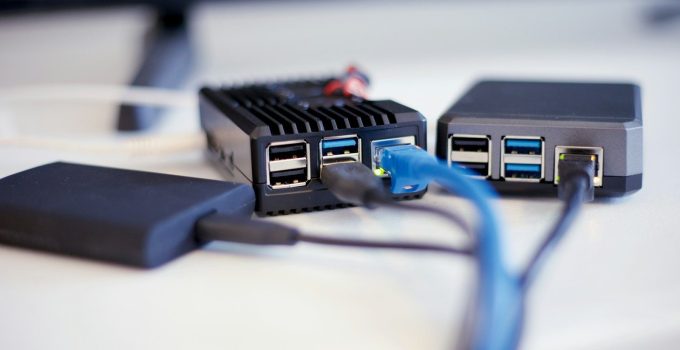
A more decentralized archival future becomes especially interesting if a person could take a used office computer, install a 500 GB or 1 TB drive, run a simple installer, and become a useful participant in preserving public knowledge.
Used Dell OptiPlex systems are a good example. Millions of similar business desktops exist. They are inexpensive, widely available, relatively power efficient, and often perfectly capable of running Linux and network services for years. A machine that is no longer impressive as a desktop computer can still be an excellent small server.
Imagine installing an archival application and choosing to contribute 500 GB. The software could automatically select or receive portions of a larger public archive. Other nodes would store overlapping copies. The network could continuously verify that enough copies remained available and redistribute data when machines disappeared.
One participant would not need to store the entire archive. That is the important part. A sufficiently decentralized system could treat storage capacity as something additive. Ten thousand people contributing modest amounts of storage could collectively provide substantial capacity and redundancy.
Small Nodes Could Make Decentralization Much Broader
A network is technically distributed when many machines participate, but meaningful decentralization also depends upon who can realistically operate those machines. If participation requires specialized equipment, large amounts of storage, or significant capital, the network may still become concentrated among professional operators.
Lowering hardware requirements changes the social structure of the network. A student, hobbyist, library, small nonprofit, independent publisher, school, neighborhood organization, or ordinary household could contribute. Different participants could preserve different collections according to their interests.
A university might preserve scientific material. A local historical society might preserve regional archives. An open-source community might preserve software releases and documentation. Individuals might preserve books, essays, art, music released for redistribution, or public datasets they believe deserve to survive.
The result would resemble a worldwide cooperative library in which no single participant has to own the entire library.
IPFS Already Provides Part of This Model
IPFS is particularly useful for this kind of thinking because it separates the identity of a file from the location of a particular server. Files are addressed through cryptographic content identifiers. Multiple machines can store the same content, and anyone retrieving it can verify that it matches the expected identifier.
An ordinary computer can run an IPFS node and pin selected files. The operator controls how much storage is devoted to that content. If several independent nodes pin the same collection, its resilience increases.
IPFS does not automatically guarantee permanent preservation. If nobody continues storing a file, it can eventually become unavailable. But this flexibility can also be useful. IPFS is well suited to a living layer of distributed information where communities intentionally decide what they want to preserve.
A permanent archival system could therefore combine ideas rather than expecting one protocol to solve every problem. IPFS could distribute active content. A permanence-oriented network could preserve major snapshots or finalized publications. Local nodes could maintain personally selected collections.
Different Technologies Can Handle Different Sizes of Knowledge
Not every piece of information needs the same storage mechanism. A book, photograph collection, video archive, and one-sentence public statement have very different requirements.
Bitcoin Cash provides an interesting example at the extremely small end. Its transactions can include limited amounts of arbitrary data through OP_RETURN. The Memo protocol has used this capability for short messages and social actions recorded directly through Bitcoin Cash transactions. Current standard Bitcoin Cash rules allow up to 220 bytes of pushed data across data outputs in a transaction, so this is obviously not a practical way to store books or large files.
It can, however, be useful for tiny permanent records such as identifiers, hashes, timestamps, pointers, short statements, or proofs that another piece of information existed at a particular point.
This suggests a layered architecture. Large files do not need to live directly on a blockchain. A blockchain can preserve a tiny cryptographic reference. IPFS or another distributed storage layer can handle ordinary files. A permanence-oriented archive can preserve material intended to endure for generations.
Permanent Does Not Mean Everything Should Be Permanent
Permanent storage also requires judgment. There are good reasons that some information should remain temporary. Private information, accidental uploads, confidential documents, copyrighted material uploaded without authorization, and unfinished drafts should not automatically become permanent public records.
A useful archival system therefore needs intentionality. A working document might exist locally or on IPFS while it is being edited. A completed public version might later be committed to permanent storage. Particularly significant versions could receive permanent timestamps or cryptographic references.
This gives creators something similar to layers of permanence. Temporary information can remain temporary. Distributed information can remain available as long as communities value it. Important publications can be deliberately moved into long-term preservation.
Preserving Knowledge Should Be Something Ordinary People Can Do
The most interesting future may not be one enormous permanent database. It may be an ecosystem of interoperable archives with different strengths. Some systems could optimize for permanence. Others could optimize for inexpensive local participation, fast retrieval, privacy, large media files, or tiny permanent records.
What matters is making participation easy. Running an archive node should eventually be closer to installing a normal application than operating specialized infrastructure. A user could choose a storage limit, select topics of interest, and let the software handle replication and verification.
A 500 GB drive is small compared with the total amount of information humanity produces. Across hundreds of thousands of independent machines, it becomes enormous. More importantly, those machines would be controlled by different people in different places, making the preservation system less dependent upon any particular company, government, institution, or data center.
A More Durable Memory for Civilization
Human beings have accumulated an extraordinary amount of knowledge, but accumulation and preservation are different problems. Digital technology has made it easy to create information while sometimes making us surprisingly dependent upon temporary infrastructure for keeping it.
Permanent decentralized archives could change that relationship. Arweave demonstrates one approach to long-term storage. IPFS demonstrates how content can be distributed and verified independently of a single server. Bitcoin Cash and protocols such as Memo demonstrate how very small pieces of information can be embedded in a durable transaction history. Future systems can borrow ideas from all of them.
The ideal outcome is broader than any particular protocol. Important public knowledge should be able to survive the disappearance of its original website. Preserving that knowledge should not require ownership of a data center. An inexpensive computer and an ordinary hard drive should be enough to make a meaningful contribution.
If decentralized storage becomes that accessible, millions of old computers could become something more interesting than obsolete hardware. They could become small pieces of a distributed memory for civilization, collectively helping useful knowledge remain available to people who have not even been born yet.