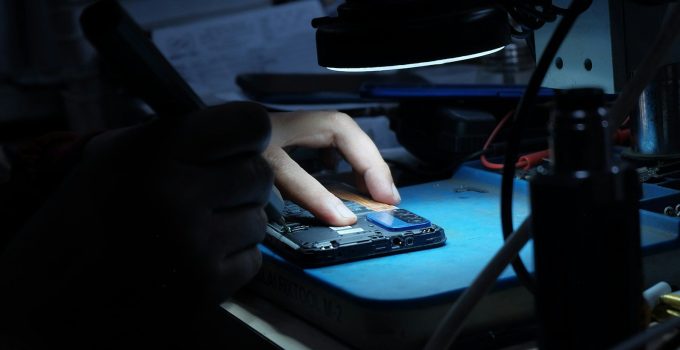
The screen on your phone cracks, so you take it to a repair shop down the street. The technician installs a genuine screen pulled from another phone of the exact same model. The touch works. The colors look right. Then a notice appears in Settings: the phone says it cannot verify the part, and it marks the screen as unknown. Nothing is wrong with the repair. The phone simply was not told it was allowed.
That small message carries a big question. If a company can decide which working parts your device will accept, who really owns it? You paid for the phone. Yet the final say over its repair sits somewhere else, on a server you will never see.
This article makes one argument. Right to repair is freedom tech for physical things. It belongs in the same family as open source software, self-custody, and encryption, and it deserves the same attention from anyone who cares about real ownership.
What Freedom Tech Already Teaches Us
Freedom tech is a loose name for tools that move control from institutions back to individuals. Open source software lets you read, change, and share the code you run. Self-custody lets you hold your own keys instead of trusting a third party with your money. Encryption and privacy tools let you decide who sees your messages. The common thread is simple. You should not need permission to use what is yours.
Most of that conversation happens on screens. It is about code, keys, and data. But the same principle applies to the objects on your desk, in your kitchen, and in your garage. A laptop, a dishwasher, or a tractor is also a bundle of rules about who may open it, fix it, and keep it running. Those rules can favor the owner or the maker.
Ownership is a set of abilities
On paper, ownership is a receipt. In daily life, it is a list of things you are able to do. Can you open the case? Can you buy a replacement part? Can you hire any technician you choose, or must you go back to the company that sold it? Each yes makes ownership thicker. Each no makes it thinner.
When the maker controls the parts, the diagnostic tools, the manuals, and the software that approves each repair, the answers drift toward no. At that point you are closer to renting your device than owning it.
Repair is the hardware version of self-custody
Self-custody means you hold the keys. Open source means you can read the code. Right to repair means you hold the manual, the parts list, and the freedom to choose who does the work. The logic is the same in all three cases. Remove the gatekeeper, and the user gains real control.
Seen this way, repair is not a hobby or a trend. It is the physical layer of a larger idea. A world with free software running on devices nobody may fix is only half free.
How Control Slips Away From Owners
Products rarely announce that they are hard to fix. The change happens through small design and policy choices.
None of these choices changes the price tag. They change what the price buys. Each one shifts a little more power from the person who owns the device to the company that made it.
Parts pairing in practice
The newest barrier is called parts pairing. A manufacturer links a component, such as a screen, battery, or camera, to one specific device. If a different part is installed, the device checks whether the part has been approved through the maker’s own software. If it has not, the device can show warnings, hide features, or refuse to work with the part.
The iPhone is the best known example. According to Apple’s own support pages, the Parts and Service History screen can label a replaced screen, battery, or camera as “Unknown” when the part is not genuine, or when it has not been verified and linked to the phone after the repair. An unverified battery can also lose reliable battery health readings. Apple has since added a Repair Assistant that lets supported genuine parts, including used ones, be calibrated on the device. That is real progress. It also shows where the power sits. The owner gets the feature back when the maker’s software agrees.
The cost of a missing permission
Think about what parts pairing means for a working part. The part fits. The part functions. The only thing missing is a permission. That is a software lock on a physical object, and it is the clearest place where freedom tech and repair meet.
The costs land on ordinary people. Devices that could have been fixed for a modest price are replaced instead. Every forced replacement moves money out of households and into a small number of large firms.
The Laws That Are Opening the Hood
Lawmakers have started to treat repair as a matter of ownership rather than convenience. Several states and the European Union now require makers to share what repairers need. The details differ, but the direction is the same. More parts, more manuals, and fewer locks.
Here are the key rules worth knowing. These are summaries for general education. For specifics, read the full text or check with your state attorney general.
California and Minnesota set the baseline
California SB 244 took effect on July 1, 2024. For electronics and appliances with a wholesale price of $100 or more, makers must offer documentation, functional parts, and tools for at least seven years after the last date a model was manufactured. For products wholesaling between $50 and $99.99, the requirement is three years.
Minnesota’s Digital Fair Repair Act also took effect on July 1, 2024. It covers digital electronic equipment sold on or after July 1, 2021. Makers must make parts, tools, and documentation available to owners and independent repair shops on fair and reasonable terms. Together, these two laws set a simple expectation. If you sell it, you help keep it running.
Oregon takes aim at parts pairing
Oregon SB 1596 goes a step further. It bans parts pairing that blocks a working replacement part, reduces the performance of a device, or shows warnings the owner cannot dismiss. The rule applies to consumer electronic devices first made and sold after January 1, 2025. The Oregon Attorney General can enforce against violations that occur from July 1, 2027.
That makes Oregon one of the first places to treat a software lock on a part as a consumer issue in its own right. It names the exact problem the unknown screen message represents.
Europe moves on its own track
The European Union adopted Directive (EU) 2024/1799 in June 2024 to promote the repair of goods. Member states were required to apply their national rules from July 31, 2026. Progress has been uneven. Germany had its law in force by that date, while several large markets, including the Netherlands and Italy, were still working through their bills in the weeks after the deadline.
Even with the delays, the signal is clear. Repair is becoming a standard expectation in major markets, not a special request.
Repair as a Path to Abundance
Abundance is usually framed as making more things. Repair offers a quieter version. It is about getting more years out of the things you already have. A phone that lasts six years instead of three doubles the value of the money spent on it.
That extra value stays in the household. When products cannot be fixed, each purchase starts to behave like a subscription to the maker, with a renewal fee every time something breaks.
Community repair keeps skills alive
Volunteer repair cafes show what this looks like at street level. Neighbors bring broken lamps, toasters, and bicycles, and volunteers help fix them while teaching the owners how.
Those events depend on access. A skilled volunteer can do little without parts and manuals. Good repair laws and repair-friendly design make every local fixer, paid or unpaid, more useful to the people around them.
How to Buy With Repair in Mind
You do not have to wait for every law to pass. The most direct vote you have is at checkout. A few minutes of research before you buy can add years to a device and keep more control in your hands.
Here is what to look for:
- Published repair manuals. Check whether the maker offers official guides or whether independent guides exist for the model.
- Parts you can buy. Look for an official parts store that sells to owners, not only to authorized shops.
- Repair scores. Some regions publish repairability ratings, and independent sites score popular devices.
- Standard screws and replaceable batteries. These small details often decide whether a repair costs little or a lot.
- Software support length. A device that stops getting updates can become unsafe long before the hardware fails.
- Parts pairing policies. Search the model name with “parts pairing” or “unknown part” before you buy.
Questions to ask before you pay
A short checklist helps at the store or online. Ask whether an independent shop can replace the battery without the maker’s approval. Ask how long the company promises parts and updates.
If the answers are vague, treat that as information. A company that is proud of its repair support usually says so clearly. Silence often means the gatekeeper is still in place.
Conclusion
Freedom tech has taught a generation to ask who controls their code, their keys, and their data. The same question belongs to the physical world. When a maker can veto a working part, withhold a manual, or lock out an independent technician, ownership becomes a rental agreement with extra steps.
Right to repair closes that gap. Open manuals, available parts, and independent repair do for hardware what open source and self-custody do for software and money. Buy with repair in mind, support the laws that open the hood, and keep the things you own working for you.
This article is for educational purposes only and is not legal advice.